
Add Your Heading Text Here
he Eco Cultural Trail is a flagship heritage and sustainability initiative of the Druk Nyö Foundation, designed to integrate ecological conservation with cultural preservation in Bhutan’s central valleys. Implemented in partnership with ASIA and co-financed by the Autonomous Province of Bolzano, the project was carried out between January 2024 and June 2025.
Spanning approximately 70 kilometers, the trail connects the culturally rich valleys of Chhoekhor, Tang, and Ura in Bumthang. The project focused on rehabilitating ancient footpaths that historically linked communities, monasteries, and sacred landscapes. These routes were restored alongside key cultural landmarks, including stupas and heritage sites, ensuring both accessibility and preservation of their historical integrity.
A central component of the initiative was the documentation and conservation of biodiversity. The project identified and recorded 108 rare plant species, combining traditional ecological knowledge with scientific approaches. In parallel, 13 culturally significant sites along the route were documented and preserved, reinforcing the link between Bhutan’s natural environment and its spiritual heritage.
To support sustainable tourism, the trail was equipped with improved infrastructure such as rest stops, signage, and visitor facilities. These enhancements were designed to provide a structured and informative experience while minimizing environmental impact. The initiative also introduced digital innovation through the development of a mobile application with geotagging features, allowing visitors to navigate and engage with the trail interactively.
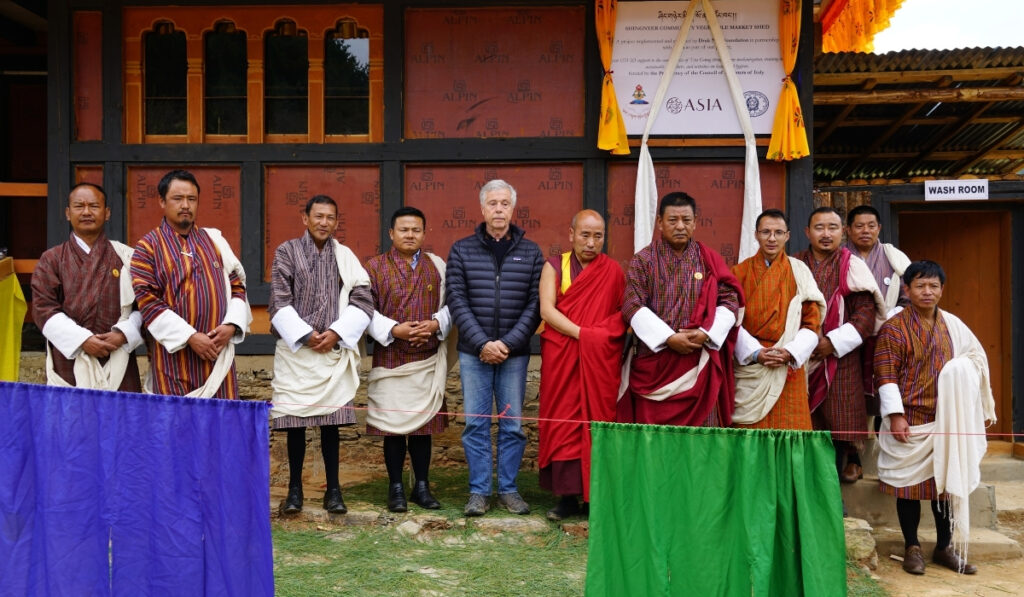
Community engagement was a key outcome of the project. Over 30 local households were trained in guiding services, hospitality, and small business management, creating livelihood opportunities linked to eco-tourism. Educational outreach programs further strengthened long-term impact, reaching more than 600 students and 60 teachers, and fostering environmental awareness and cultural stewardship among younger generations.
Overall, the Eco Cultural Trail demonstrates a balanced model of development that aligns heritage conservation, environmental responsibility, and community empowerment. It stands as a replicable approach to sustainable tourism and cultural landscape management in Bhutan.